

Wet Weather, Mud & Machinery: Protecting Construction Sites This Autumn
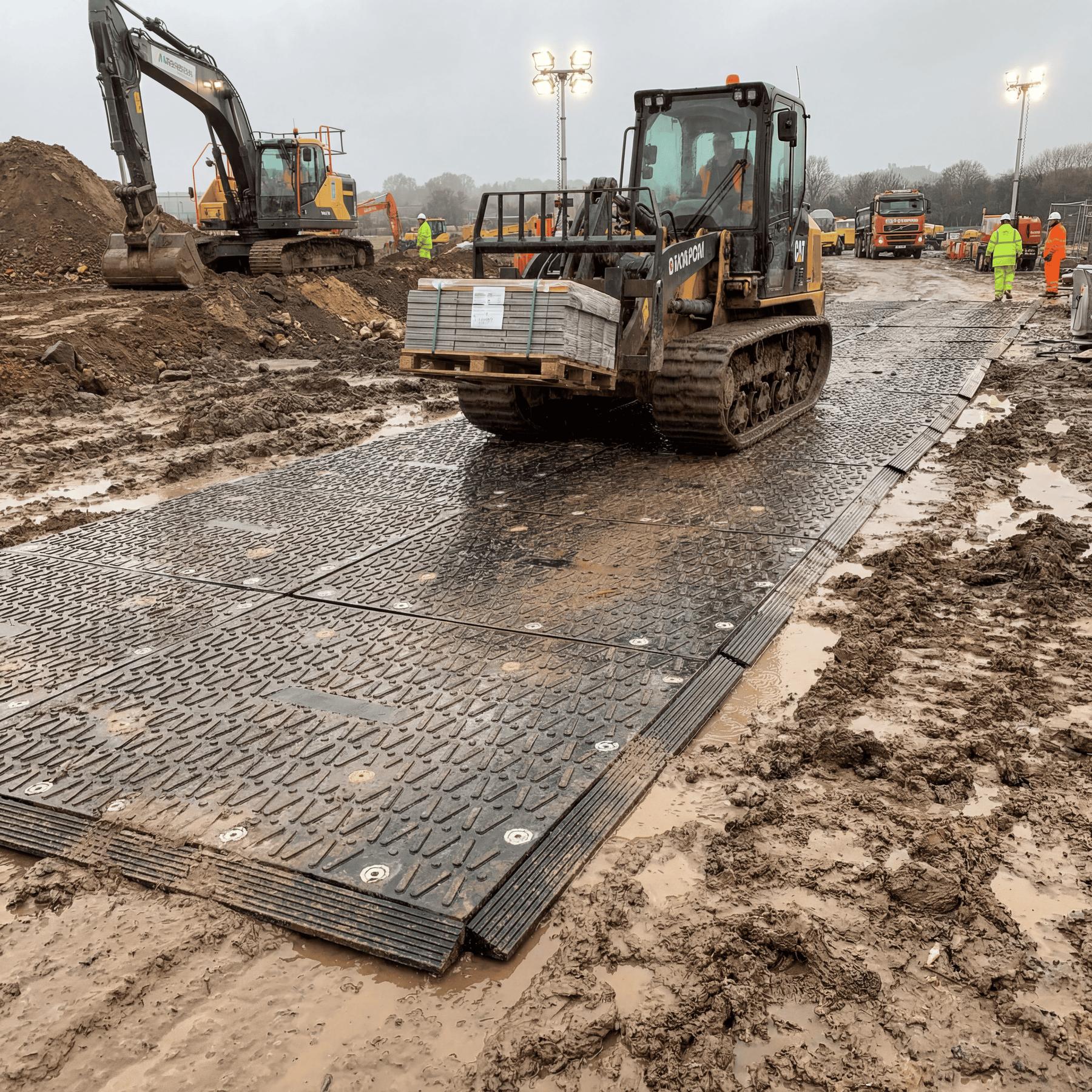
Autumn can be a challenging time for construction sites across the UK. As temperatures drop and rainfall increases, previously firm ground can quickly become soft, muddy and difficult to navigate. For sites relying on heavy plant, machinery, HGVs and regular vehicle movements, these changing conditions can create significant access and ground protection challenges.
Wet weather does not necessarily mean construction work has to come to a standstill. However, failing to prepare for deteriorating ground conditions can result in damaged access routes, deep ruts, difficult vehicle movements and expensive reinstatement work.
Fortunately, temporary ground protection and trackways can provide a practical solution. By creating stable routes for vehicles, machinery and pedestrians, construction companies can maintain access while helping to protect the ground beneath their site.
Why Autumn Weather Can Be Challenging for Construction Sites
Construction sites are already demanding environments, with heavy machinery and vehicles regularly moving across areas of soil, grass and other exposed surfaces. When autumn rainfall saturates the ground, the pressure created by these movements can quickly cause problems.
Soft ground provides less stability for heavy vehicles, while repeated traffic can create ruts and uneven surfaces. In particularly wet conditions, vehicles may also struggle to maintain traction, potentially making certain areas of a site difficult or unsafe to access.
The problem can become worse when wet weather continues over several days or weeks. What starts as a slightly muddy access route can quickly deteriorate into an area that is difficult for vehicles to cross without causing further damage.
Heavy vehicles can cause significant ground damage
HGVs, excavators, telehandlers and other heavy machinery place substantial pressure on the ground beneath them. On saturated soil, repeated vehicle movements can lead to rutting and compaction, particularly where traffic is concentrated along the same route.
Once an access route has become heavily rutted, simply continuing to drive over it can make the problem worse. It may also affect the ability of vehicles to move efficiently around the site.
Mud can affect site access
Mud is more than an inconvenience. Excessively muddy routes can make it harder for vehicles and machinery to access working areas, while mud can also be transferred onto surrounding roads by vehicle wheels.
Creating a defined, protected route can help to keep vehicle movements controlled and provide a more stable surface between different areas of a site.
Ground damage can be expensive to repair
Once construction work is complete, damaged ground may need to be levelled, repaired or otherwise reinstated. The cost and time involved can be significant, particularly where heavy machinery has repeatedly travelled across grass or soil.
Preventing unnecessary damage in the first place can therefore be a more practical approach than waiting until the ground has deteriorated.
These challenges can have an impact on productivity, site safety and project costs. Planning ahead and putting suitable ground protection in place before conditions deteriorate can help construction sites remain accessible and operational throughout the wetter autumn months.
How Ground Protection Helps on Construction Sites
Ground protection systems are designed to provide a stable surface between vehicles, machinery or pedestrians and the ground beneath them. Depending on the requirements of the project, different products can be used to create temporary roads, access routes, working areas, compounds and pedestrian walkways.
Heavy-duty trackway can be particularly useful where construction sites need to accommodate substantial vehicle and machinery movements. For example, All Weather Access’s Tufftrak panels are designed for temporary roadways and working areas used by heavy plant and machinery, with a stated load-bearing capacity of up to 150 tonnes per square metre depending on ground conditions.
Rather than allowing vehicles to repeatedly travel directly across vulnerable ground, trackway creates a defined route that can help distribute loads and reduce the risk of severe rutting.
Creating temporary access routes
One of the most useful applications of ground protection is creating temporary access routes across areas that would otherwise become difficult to navigate during wet weather.
Temporary trackway can provide routes for HGVs, plant and other vehicles, helping construction teams maintain access to different parts of a site without relying on increasingly muddy ground.
Protecting working areas and compounds
Ground protection does not have to be limited to vehicle routes. Heavy-duty panels can also be used to create stable working areas, compounds and other surfaces where equipment, materials and personnel need to operate.
This can be particularly useful during periods of prolonged wet weather when exposed ground becomes increasingly difficult to work on.
Providing safer pedestrian access
Vehicles are not the only consideration on a construction site. Employees, contractors and visitors may also need to move between different areas of the site.
Temporary pedestrian flooring and pathways can provide a more stable surface across soft or muddy areas. Products such as FastCover are designed for pedestrian access and can be used on construction sites, with features including an anti-slip surface and interlocking connections.
From vehicle access and working areas to pedestrian routes, ground protection can be adapted to meet the different demands of a busy construction site. By providing stable, clearly defined surfaces where they are needed most, it can help minimise ground damage, maintain accessibility and keep work moving when autumn weather creates more challenging conditions.
The Benefits of Ground Protection During Wet Weather
1. Maintain access in challenging conditions
Wet weather does not have to mean losing access to important areas of a construction site. Temporary trackways can provide a stable route for vehicles and machinery across ground that would otherwise become difficult to navigate.
2. Reduce ground damage
By protecting the surface beneath vehicle and machinery movements, ground protection can help reduce rutting, compaction and other forms of ground damage. This can be particularly valuable when working on grass, soil or other sensitive surfaces.
3. Help reduce reinstatement costs
Repairing damaged ground can take additional time, labour and resources. Protecting the ground during construction can help reduce the extent of reinstatement required once work is finished.
4. Improve site accessibility
A defined access route can make it easier for vehicles, machinery and people to move around a site, even when weather conditions have deteriorated.
5. Support safer working conditions
Wet and uneven ground can create additional hazards for both pedestrians and vehicles. Ground protection can provide more stable surfaces and, depending on the product selected, anti-slip features to support safer movement around the site.
6. Help prevent weather-related delays
Bad weather can disrupt construction schedules, particularly when vehicles cannot reach areas where work needs to take place. Temporary access routes can help projects remain operational when ground conditions would otherwise cause problems.
How All Weather Access Can Help Protect Your Construction Site
At All Weather Access, we provide ground protection and temporary access solutions for construction and civils projects across the UK. We work with projects ranging from building and renovation work to civil engineering, rail, telecoms, renewables and residential developments.
Our range includes heavy-duty trackway, ground protection mats and temporary pedestrian flooring, allowing solutions to be tailored according to the demands of the site.
For projects involving heavy plant and machinery, Tufftrak provides a heavy-duty option for temporary roads, access routes and working areas. Its solid HDPE construction, anti-slip surface and high load-bearing capacity make it suitable for demanding applications, subject to the specific ground conditions and requirements of the project.
For lighter-duty pedestrian requirements, products such as FastCover can provide temporary walkways across soft or wet ground, helping to create safer and more accessible routes around a construction site.
We can also provide site surveys, haulage, installation, de-rigging, and cleaning services, helping to provide a complete ground protection solution rather than simply supplying the products. Solutions are available for both hire and purchase, depending on the needs of your project. Please get in touch with our team today for more information!
Preparing Your Construction Site for Autumn Weather
The best time to think about wet-weather access is before the ground becomes saturated. Assessing your site in advance can help identify areas that are likely to experience heavy traffic, become muddy or require additional protection.
Consider which routes will be used by HGVs and plant, where materials will be delivered, how pedestrians will move around the site and whether any areas are particularly vulnerable to damage.
It is also worth considering how conditions could change throughout the project. A route that is perfectly suitable during a dry spell may become unsuitable following several days of heavy rainfall.
Planning ground protection in advance allows construction teams to put appropriate measures in place before access becomes a problem.
Keep Your Construction Site Moving This Autumn
Autumn weather can create a range of challenges for construction sites, particularly where heavy machinery and vehicles need to operate across exposed or vulnerable ground. Mud, rutting, poor traction and damaged access routes can all affect the efficiency of a project and potentially result in additional costs.
Ground protection and temporary trackways provide a practical way to manage these challenges. By creating stable access routes, protecting the underlying ground and supporting vehicle and pedestrian movements, construction companies can be better prepared for changing weather conditions.
Whether you need a temporary haul road for heavy machinery, a protected working area or a pedestrian pathway across muddy ground, choosing the right solution for your site can help keep your project moving throughout the autumn and winter months.
If you need ground protection for your construction project, we can help you find a suitable solution for your site, from heavy-duty temporary trackways and working areas to pedestrian access. Get in touch with our team today to discuss your requirements and find out how we can help protect your site from challenging ground conditions.
FAQs
Why is ground protection important on construction sites?
Ground protection helps provide stable surfaces for vehicles, machinery and pedestrians while reducing damage to the ground beneath. It can also help reduce the need for costly reinstatement.
Can trackway be used in wet and muddy conditions?
Yes. Trackway is specifically designed to provide access across soft, wet or otherwise difficult ground, although the most suitable product will depend on the site and ground conditions.
Can heavy machinery travel over temporary trackway?
Yes. Heavy-duty products such as Tufftrak are designed for heavy plant, machinery and vehicle access, with a stated load-bearing capacity of up to 150 tonnes per square metre depending on ground conditions.
Does ground protection prevent rutting?
Ground protection can significantly reduce the risk of severe rutting by providing a more stable surface and distributing vehicle loads, although performance will depend on the product, ground conditions and application.
Can temporary trackway help prevent construction delays?
It can help maintain vehicle and machinery access when wet ground would otherwise make routes difficult to use, potentially reducing weather-related disruption.
Is ground protection suitable for pedestrian access?
Yes. There are dedicated pedestrian flooring and temporary pathway solutions designed to provide stable access across soft or muddy areas.
Can ground protection be installed on grass?
Yes. Depending on the product and ground conditions, ground protection can be used over grass and other vulnerable surfaces to help protect them from vehicle and pedestrian traffic.
Can I hire ground protection for a construction project?
Yes. All Weather Access provides ground protection solutions for both hire and purchase, depending on the requirements of the project.
Does All Weather Access provide installation?
Yes, we can provide installation and de-rig services, as well as haulage and cleaning, depending on the requirements of the project.
Keep Your Construction Site Moving This Autumn
Don’t let wet weather, mud and difficult ground conditions put unnecessary pressure on your construction project. Get in touch with All Weather Access today to discuss your project and find the right ground protection solution for your requirements.